Special Olympics Site Redesign
Rochester Institute of Technology | 08/2025 - 12/2025
Intro & Overview
During the fall of 2025, my GUI design class was approached by the Special Olympics of New York with a proposal for a website revamp. Our final individual project for that semester was a complete re-imagining of their website, with a focus on improving the task flow of a specific assigned user group.
I was assigned the user group of “Donors” for my focus area. I conducted research and fact-finding, ideation on style, created multiple prototypes of varying levels of fidelity to gather feedback, and finally presented a clickable Figma prototype with an accompanying pitch deck at the end of the semester. This project gave me end-to-end experience in the UX process with a real client.
Research & Competitive Analysis
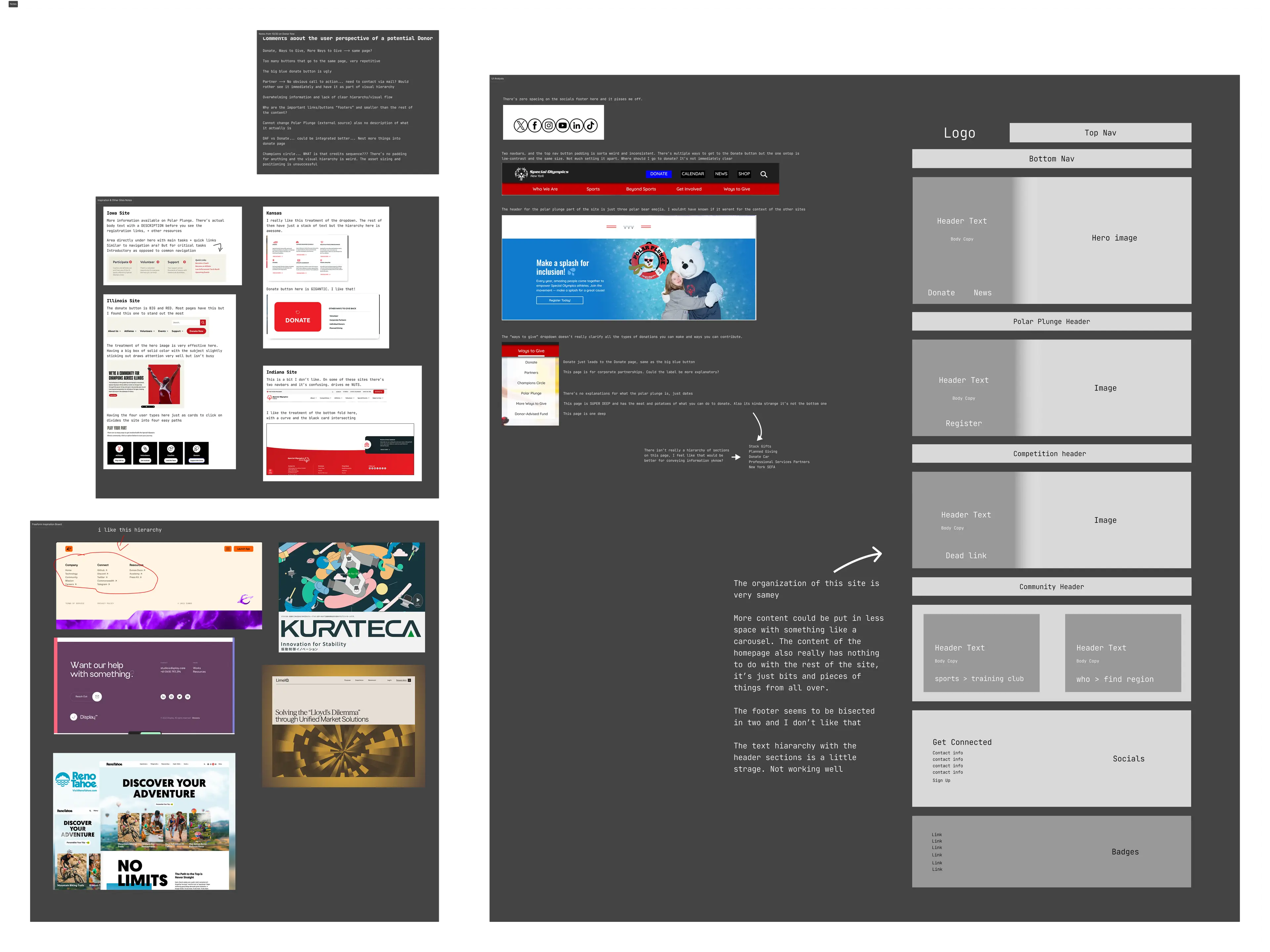
I dug through the original site to create a list of all the different ways to contribute, and found that a lot of the information was fragmented and located in different areas. To improve the discoverability of this information for users with different goals, I chunked the list into three groups: Donations, Partners, and Fundraising Events. The design of the new pages and navigation was based on this grouped information
I also conducted a competitive analysis of Special Olympics websites from other U.S. states. An effective pattern that emerged was sites consolidating giving options under a single entry point, validating my earlier findings about fragmentation.
Style Exploration
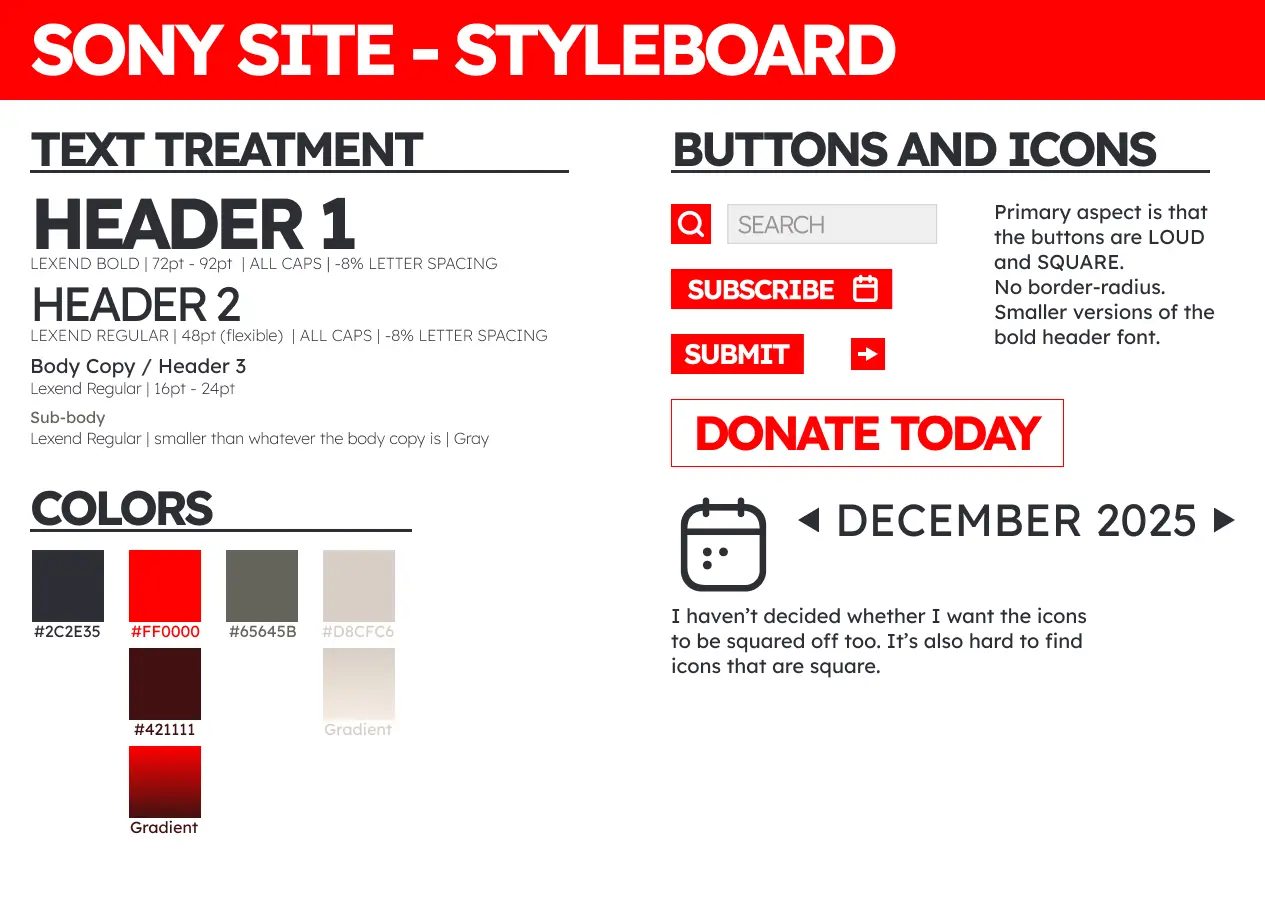
In parallel with the research phase, I was developing ideas for how I wanted the site to look. I knew I wanted to draw inspiration from other sites that featured an “athletic” or “outdoorsy” aesthetic to convey a feeling of authenticity, clarity, and community.
An emergent aspect during ideation was the idea of a heavy, loud, almost “militant” edge to the style as a call-to-action. As part of our research we held a discussion with some of the faculty of Special Olympics New York and they explained that for some of the athletes, the check-ups and care that they receive at the events are the only medical care they have access to. I honestly felt outraged at this, and I felt the need to channel a bit of that into the final design.
I compiled these ideas into a styleboard that included color, typography, images, and various examples of page elements.
Prototyping, Iteration & Final Presentation
I began with basic sketches of the layout, and quickly moved onto Figma to produce prototypes of multiple fidelity levels. Each iteration I was able to gather feedback from classmates, the professor, and acquaintances who I used as subjects in a task walkthrough. This feedback was very important as I was able to see what was and wasn’t working and implement that into the next iteration.
The project culminated in a high-fidelity, clickable Figma prototype spanning multiple pages, with a particular emphasis on donor pathways. I also created a slide deck to pitch the redesign, outlining my research, design decisions, and how the final solution addressed the original user group goals.
Design Artifacts
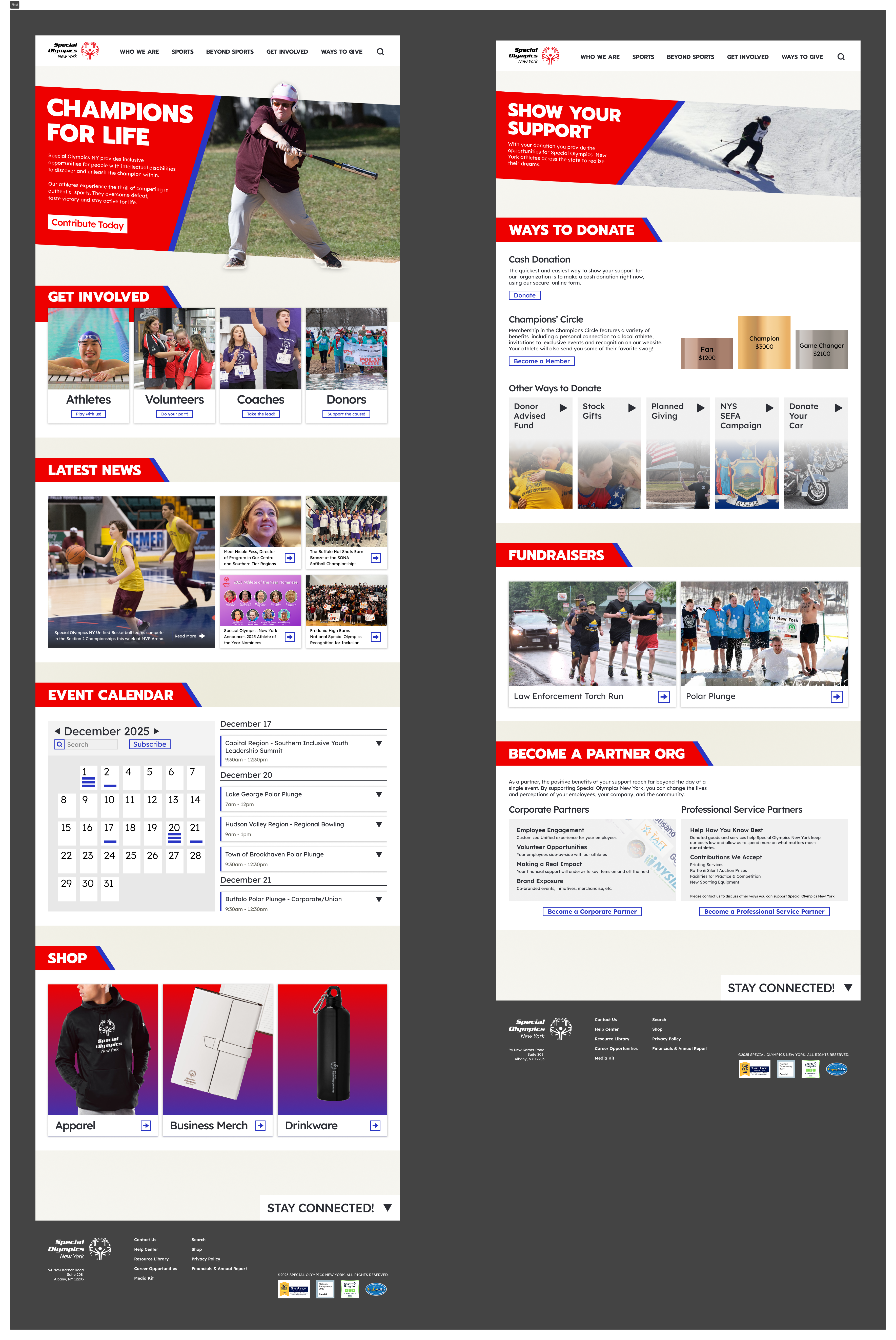 High-fidelity redesign focused on clear donor pathways and calls to action.
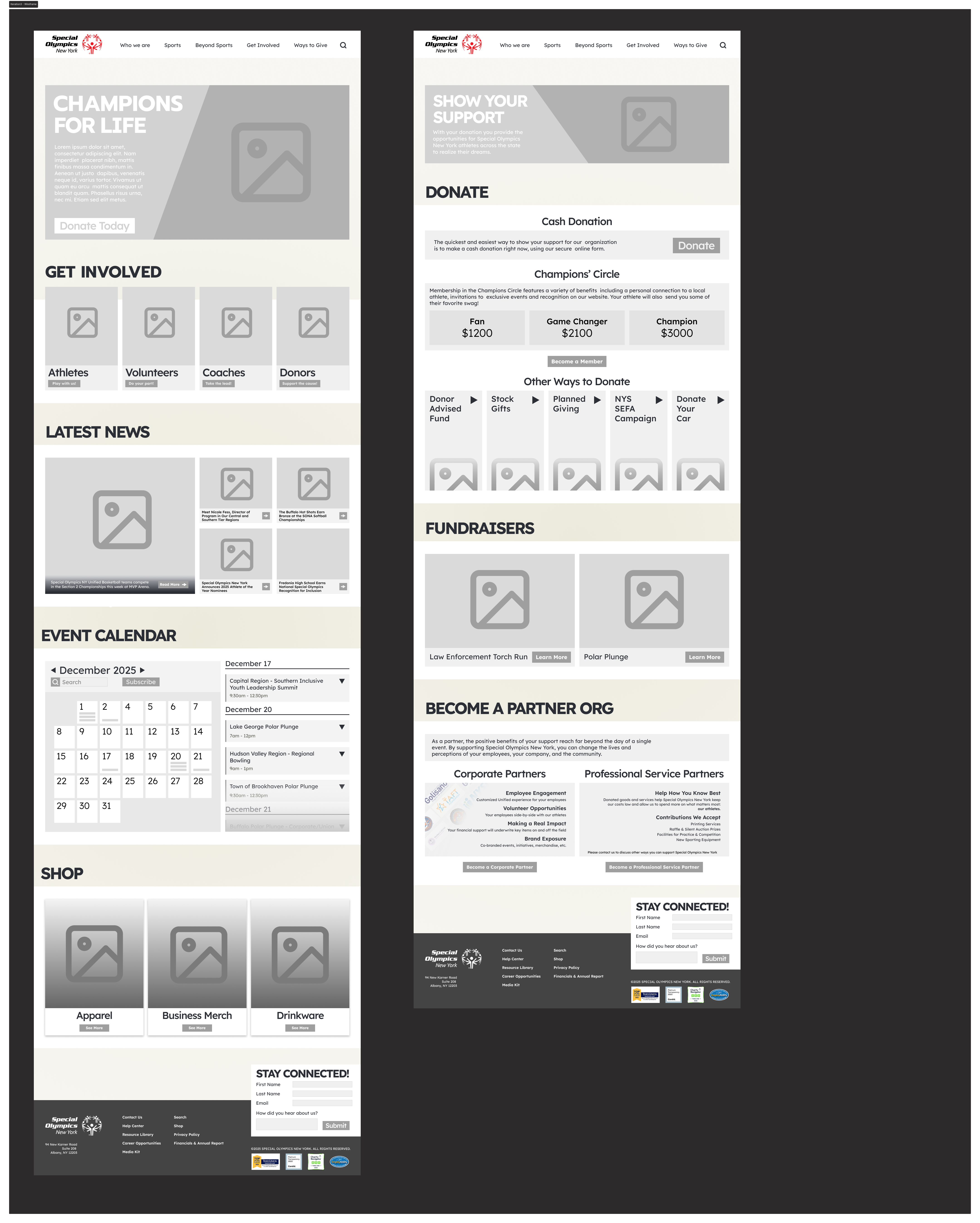 Wireframe exploring the donor-focused site structure and layout.
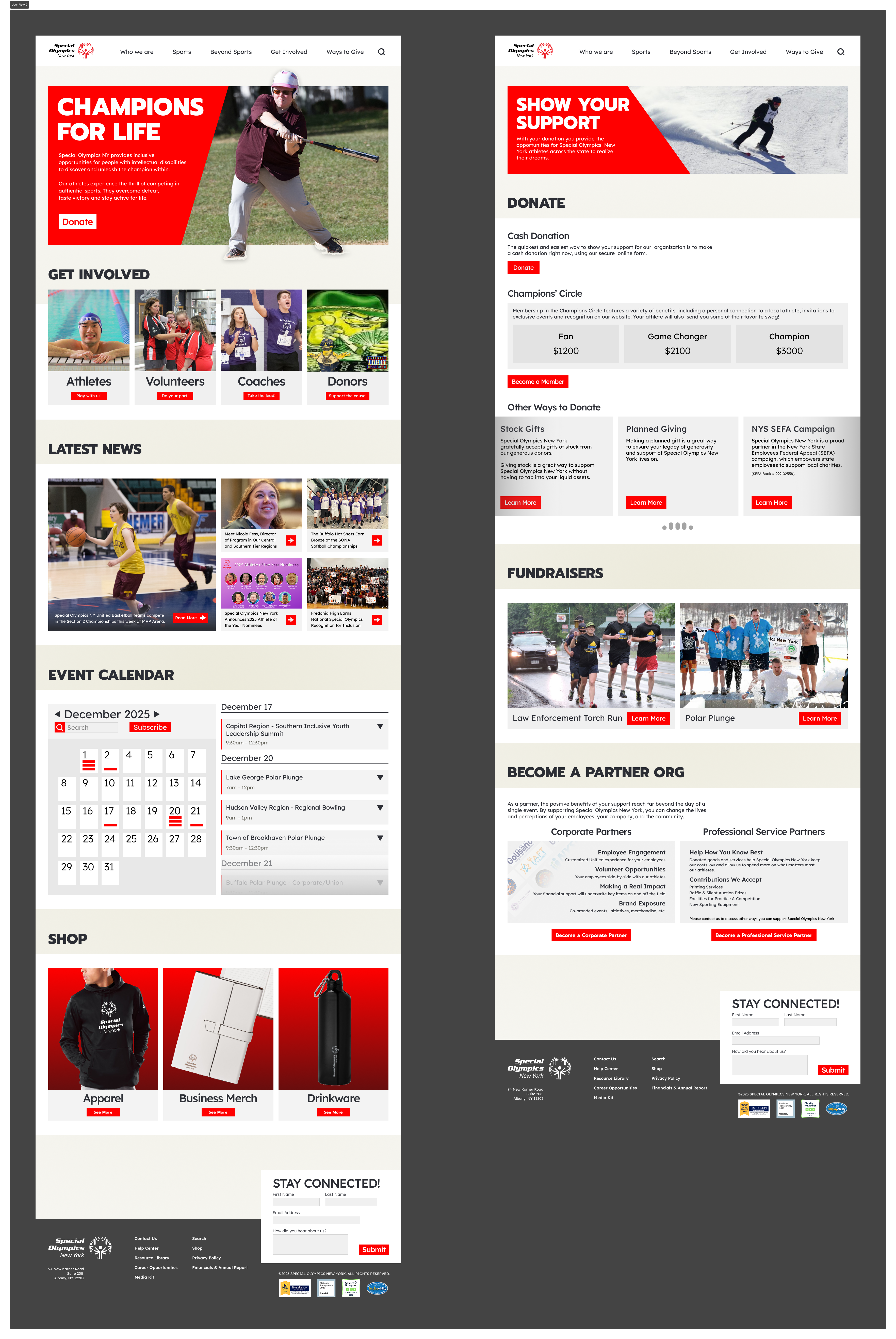 User flow mapping the key paths donors can take through the site.High-fidelity redesign focused on clear donor pathways and calls to action.Wireframe exploring the donor-focused site structure and layout.