
AxoLift Capstone Project
Rochester Institute of Technology | 1/2025-12/2025
As part of a small team, I helped create a web app for a group of volunteer medical transport organizations around Rochester to streamline their operations. I contributed to research, site architecture, visual design, and front-end development.
Context
Volunteer medical transport organizations around Rochester provide ride services to local senior citizens.
Each organization operated in a unique way with different software, or no software at all.
Goals
- Create a web app to automate and track operations for multiple different medical transport organizations.
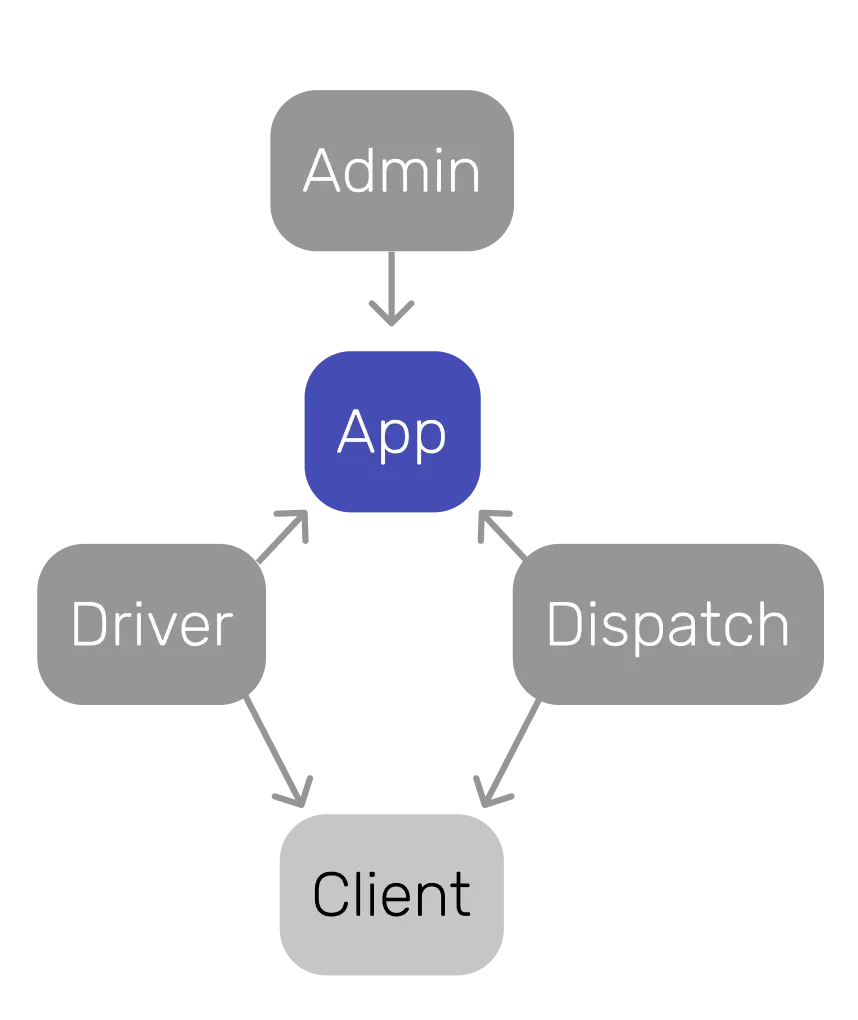
- The app will track rides, and different types of volunteers will be able to access their part of the ride workflow through the app.
- Different organizations run differently, so the software should be configurable to fit how they work.
Design Process
Our group assumed that the app would be conceptually similar to a rideshare app like Uber or Lyft. We were immediately proven wrong.
We got feedback that organizations did not want their riders to have to use our app in any way. Phone calls represented an important social connection for seniors in a way that I hadn’t considered as a young person.
The process of hammering out details and gaining consensus on design requirements was an important experience in negotiating between different stakeholders in a productive manner.
Development Process
This was the most challenging part of the project. We built the front-end in FlutterFlow, and quickly ran into issues where we needed more specific features than the platform offered.
A significant revision of the back-end Firebase architecture had to be done as well, which proved to be a massive time crunch. Despite the setbacks, our team was able to complete a viable product by the end of the term.
Final deployment went well, and we were able to demo the app’s functionality live to the clients during our final presentation.


Results / Postmortem
Our app didn’t get selected for further use, but the project was a success in the sense that we passed and learned a lot of important things.
A lot of the things that set us back were architectural and tech selection decisions we made early on. FlutterFlow was attractive from the outset for its low-code but ended up taking more effort for the full front-end.
Everyone will make mistakes. I’m happy that I experienced this in a classroom environment where I can take the lessons and apply them to my professional work. I think that’s an asset.
Design Artifacts
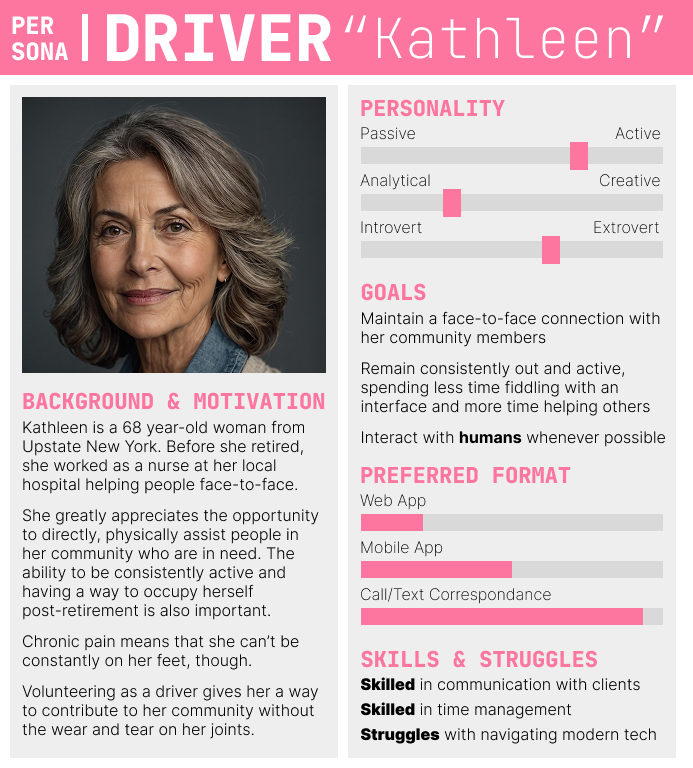 User persona capturing the needs of a volunteer transportation coordinator.
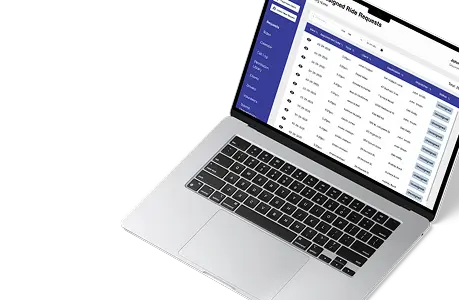
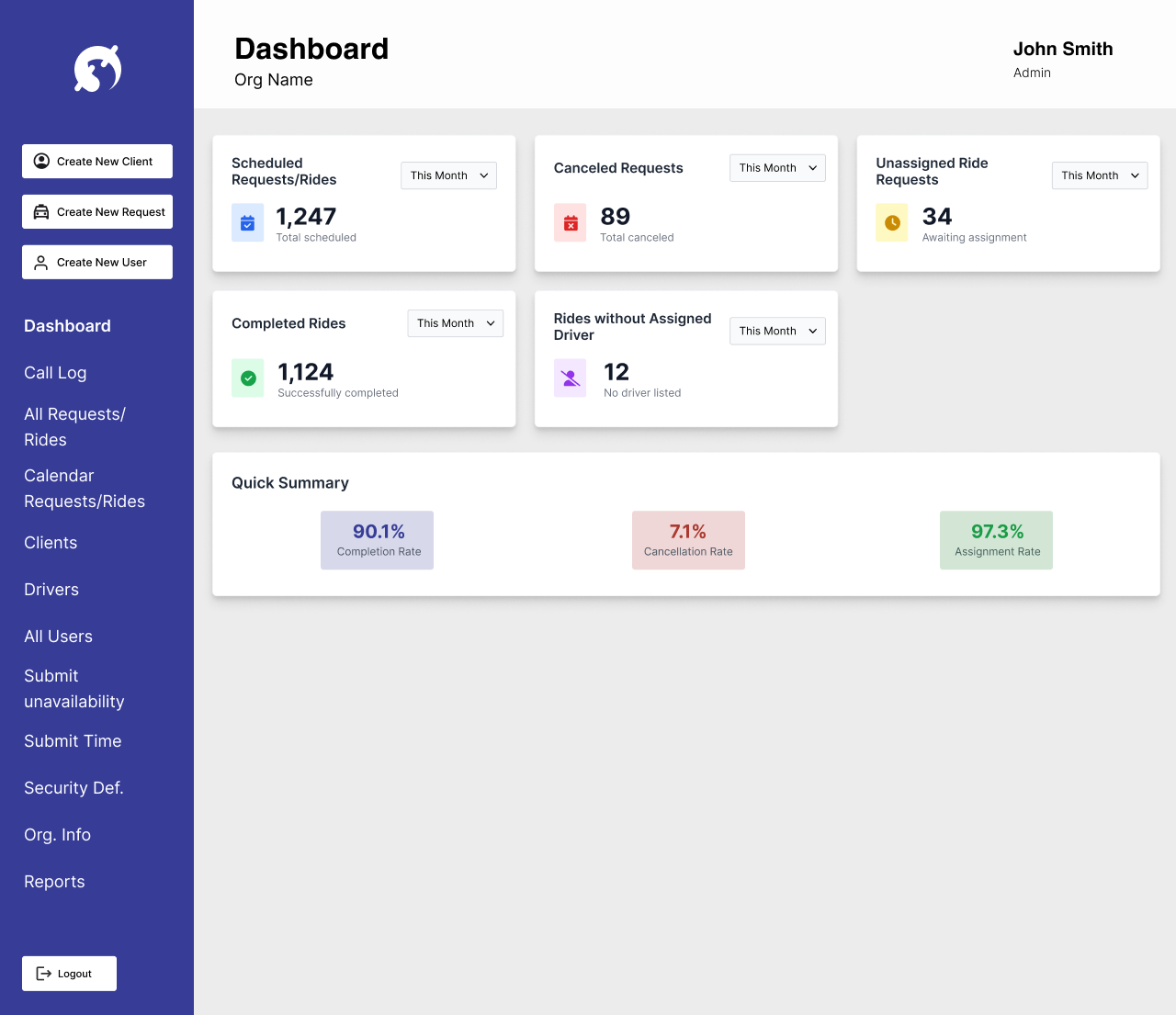 High-fidelity desktop dashboard for managing rides and volunteers.
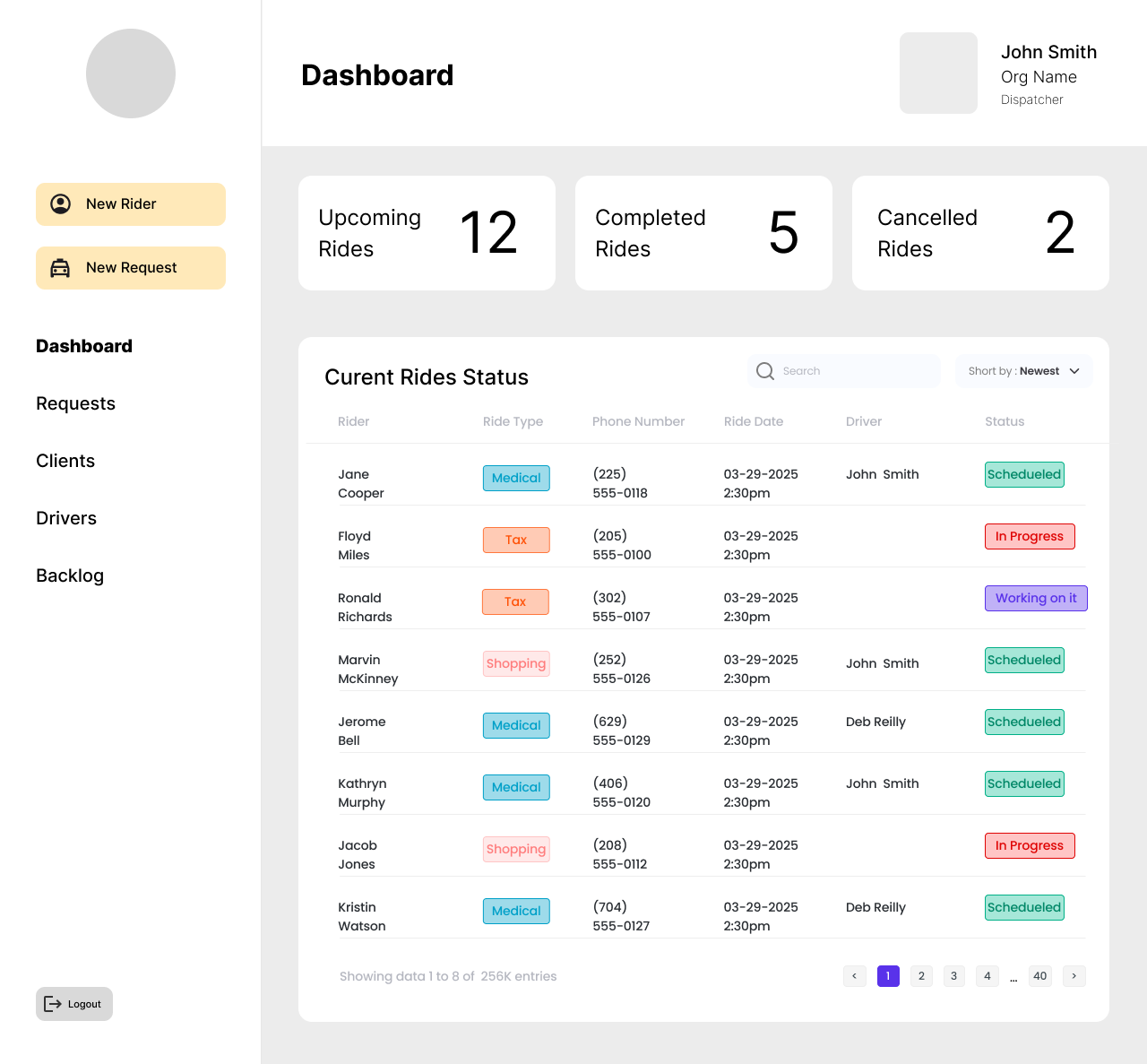 Low-fidelity dashboard wireframe exploring the app's core layout.
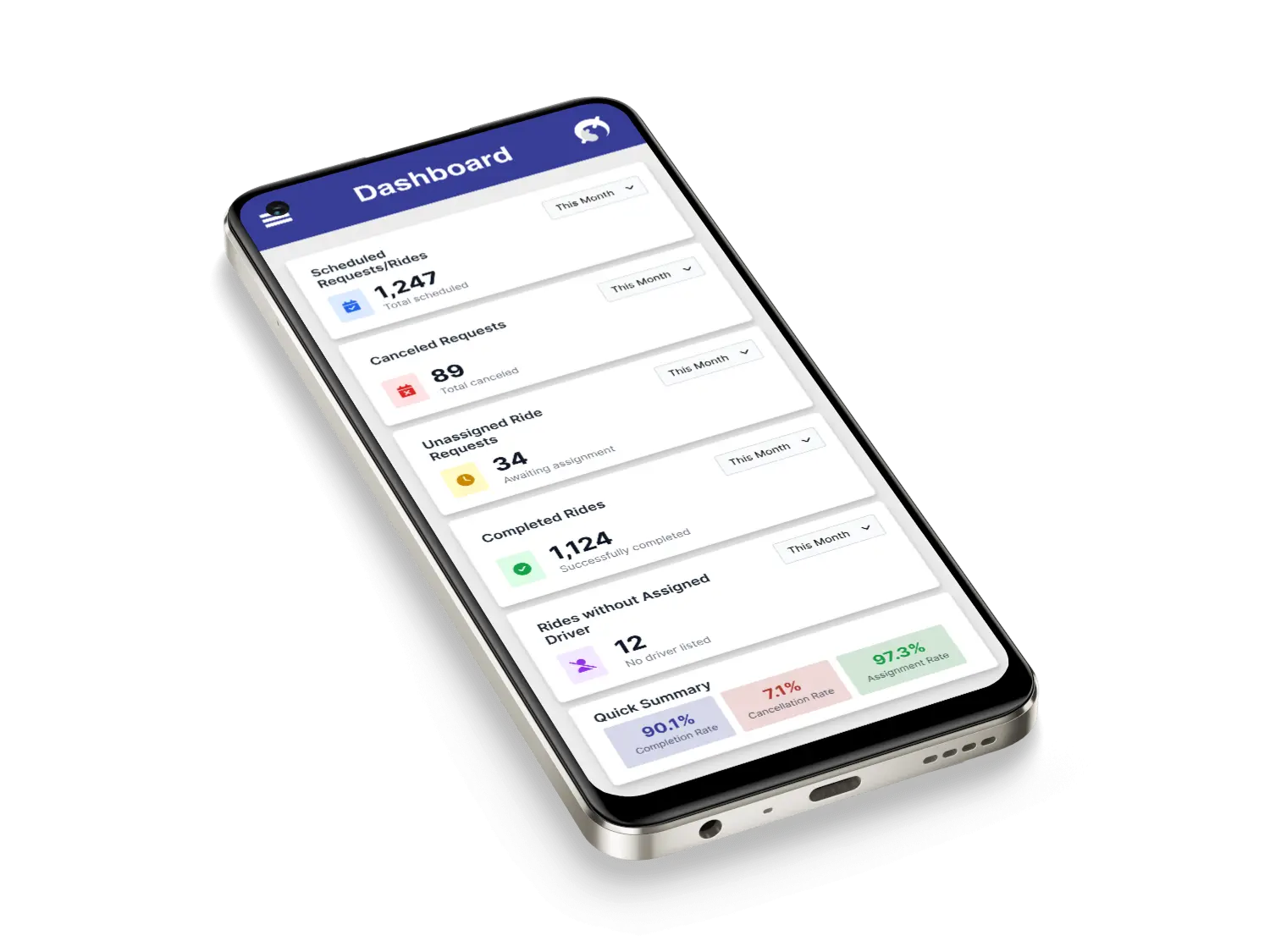
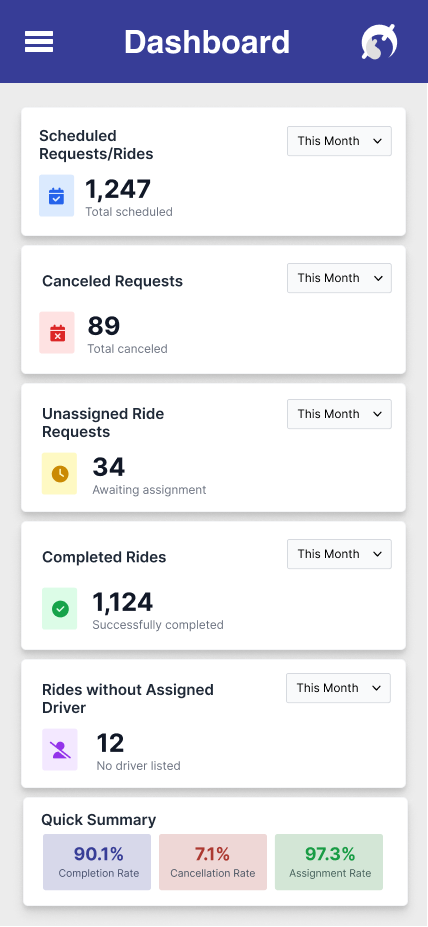 Mobile dashboard concept for accessing ride operations on the go.
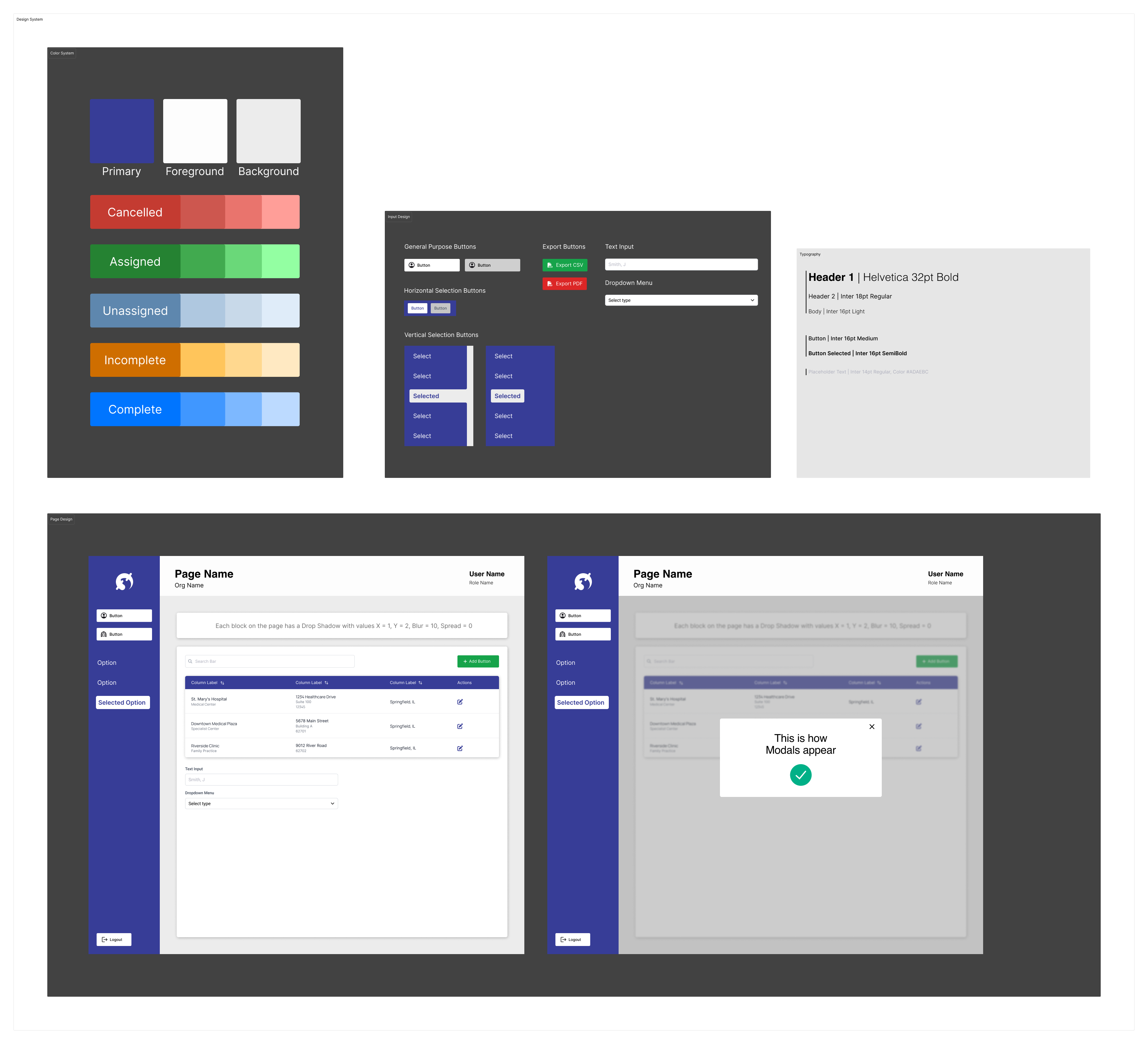 Visual design system defining AxoLift's reusable interface elements.User persona capturing the needs of a volunteer transportation coordinator.High-fidelity desktop dashboard for managing rides and volunteers.